How to calculate the profitability of your Vacation rental property?
Income, costs, margins and KPIs for understanding the real profit generated by a property
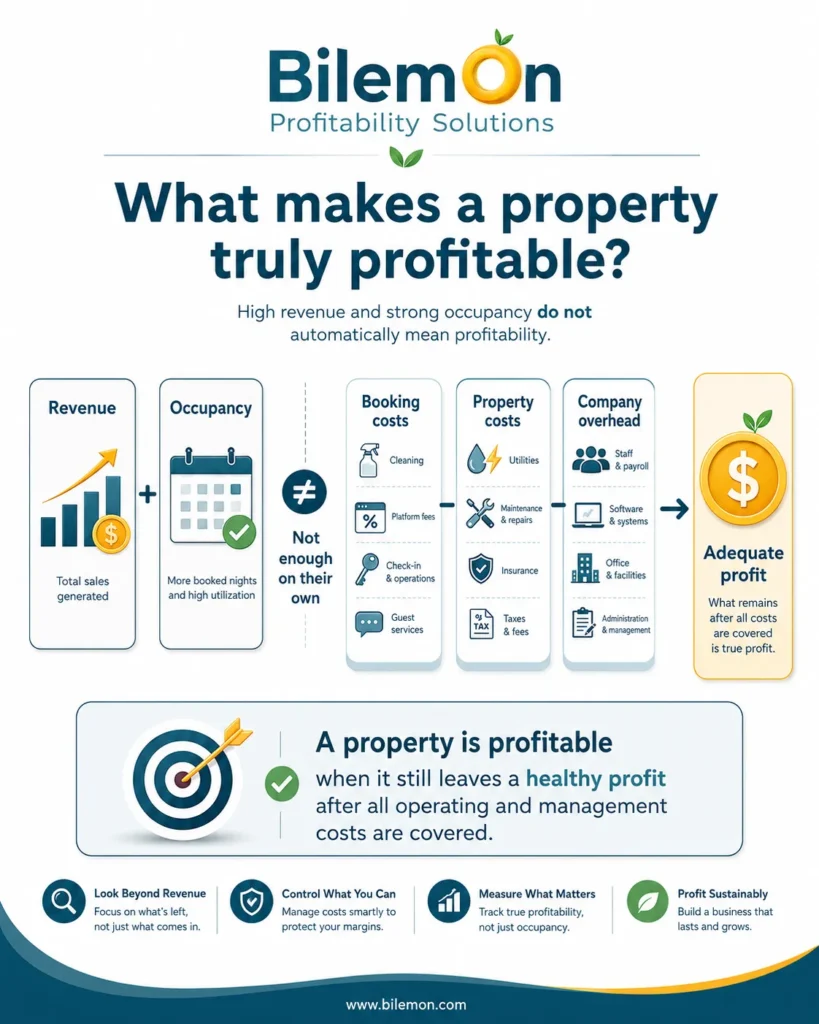
A high number of bookings does not automatically mean that a Vacation rental property is genuinely profitable. A property can maintain strong occupancy throughout the year, generate a significant level of revenue and receive very positive guest reviews, while still producing only a small financial return. In some cases, despite appearing successful from an operational or commercial point of view, the property may even generate a loss once all the relevant expenses have been considered.
Real profitability exists only when the income generated by the property is enough to cover every cost associated with its operation. This includes the expenses directly linked to each booking, such as cleaning, laundry, guest supplies, platform commissions and payment fees. It must also cover the property’s own costs, including maintenance, repairs, utilities, insurance and other recurring expenses. In addition, the income must contribute to the wider company structure required to manage the property, such as staff, software, administration, marketing and general overheads. After all these costs have been deducted, the property should still generate a reasonable and sustainable profit.
For this reason, understanding how much a Vacation rental property truly earns requires a broader financial analysis. Reviewing only the average daily rate, occupancy percentage or total revenue can provide an incomplete or even misleading picture. These indicators show commercial performance, but they do not reveal the final financial result. To measure real profitability, several operational and financial indicators must be studied together, including costs, margins, net income, cash flow, booking expenses and the contribution of each property to the overall business.
Revenue, income and profitability are not the same
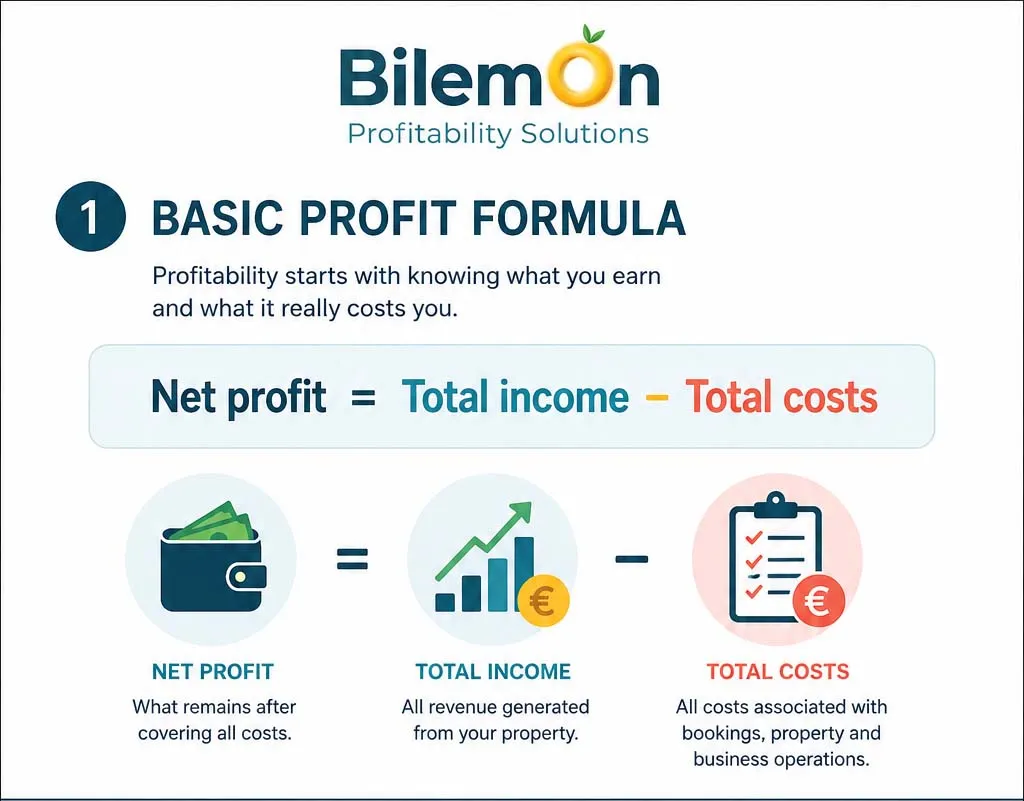
Revenue represents the amount generated by marketing and selling the accommodation. Profitability, however, shows how much remains after paying all the costs required to generate that income.
How much revenue has been generated.
How much has actually been collected.
How much the bookings have cost.
Which expenses belong to the property.
How much it costs to manage the accommodation.
What share of company overhead the property must support.
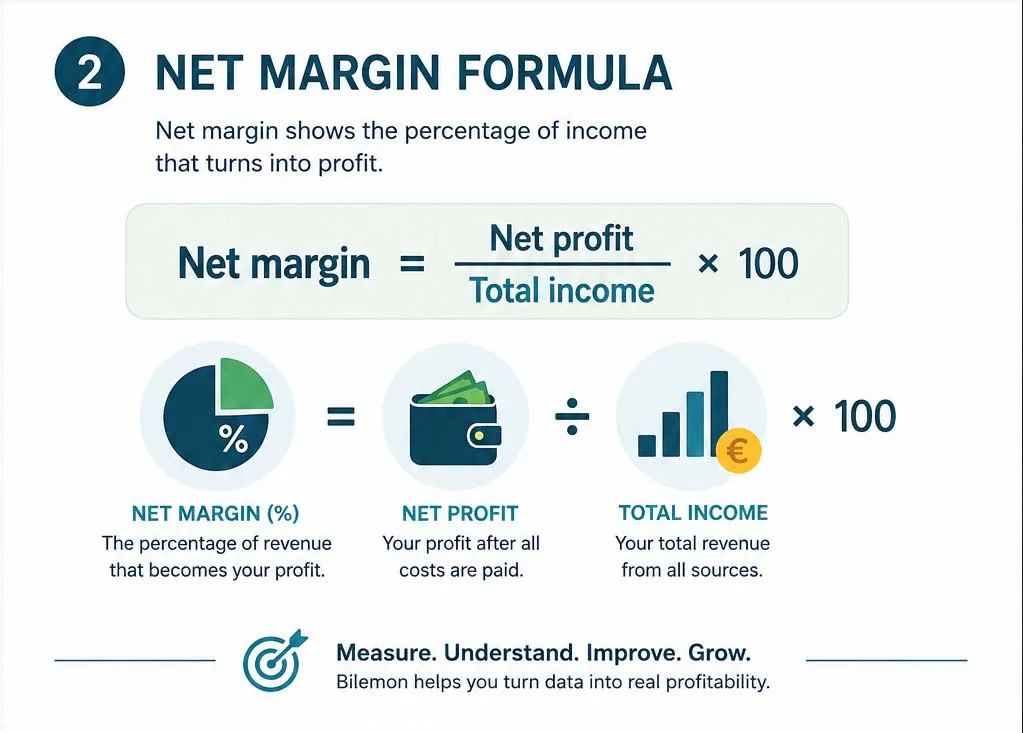
What final profit the property generates.
Step one: audit the income
Before analysing costs, it is essential to verify that all income is correctly recorded, classified and reconciled.
Bilemon carries out income audits to confirm that the information from bookings, distribution channels, bank accounts and management systems matches.
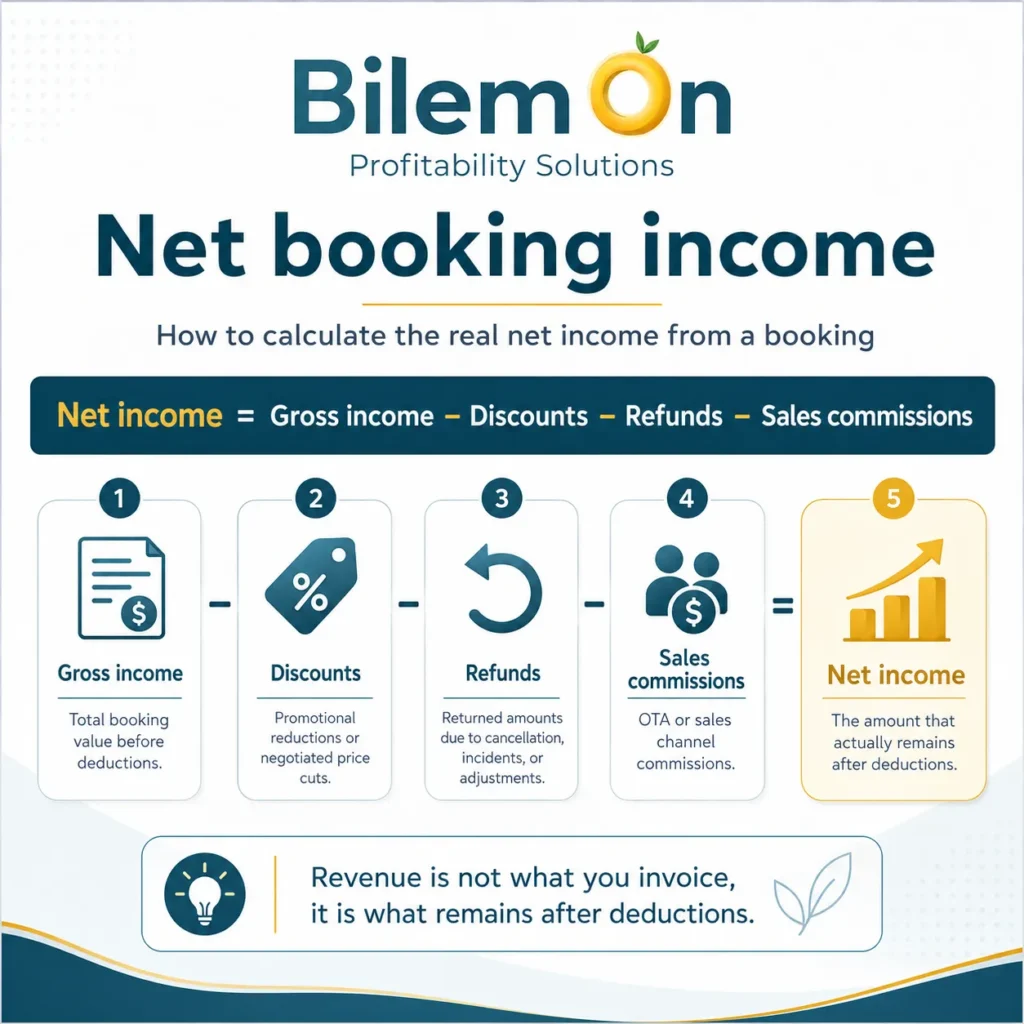
Accommodation income.
Supplements and additional services.
Cleaning fees charged to guests.
Additional guest fees.
Discounts, cancellations and refunds.
Channel commissions.
Amounts outstanding.
Income received directly.
Differences between the PMS, platforms and bank transactions.
A confirmed booking does not always equal collected income. An amount may appear in the PMS but not yet in the bank, or a commission may be recorded as income when it should be classified as a cost.
Step two: calculate the cost of each booking
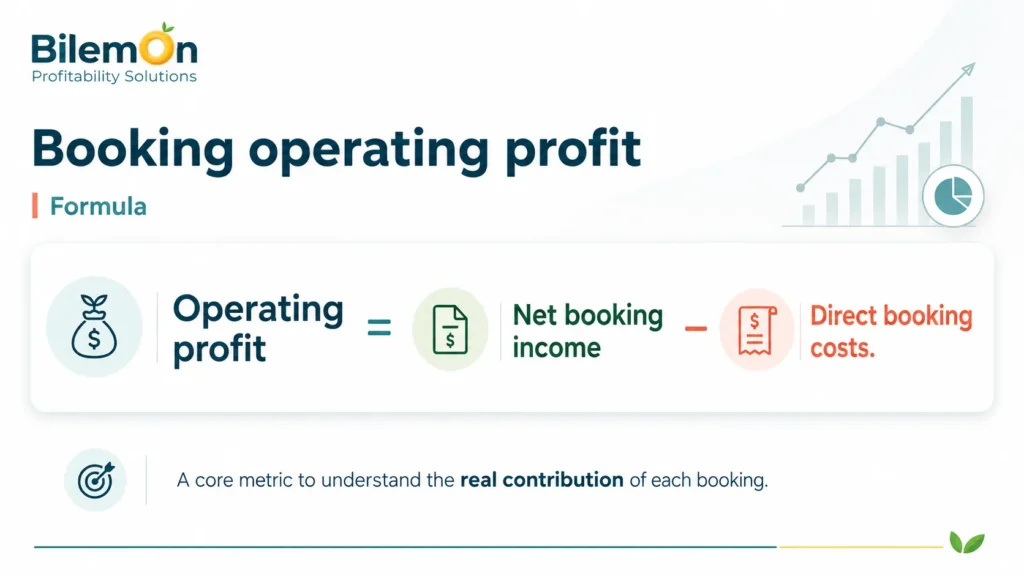
Booking operating profit
Booking costs are the expenses generated directly by a stay.
Cleaning and laundry.
Amenities and consumables.
Check-in and in-person guest support.
Platform and payment commissions.
Welcome gifts.
Services contracted specifically for the stay.
Guest-related incidents.
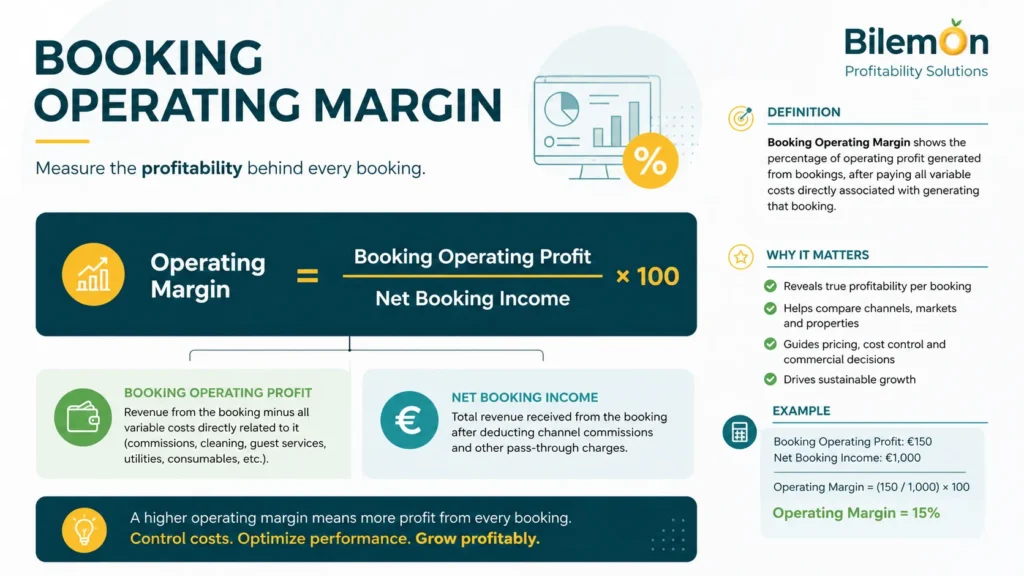
Booking operating margin
Booking example
Item
Amount
Net income
€1,000
Cleaning
−€90
Laundry
−€45
Amenities
−€15
Payment commission
−€20
Guest support and check-in
−€30
Booking operating profit
€800
Operating margin
80%
This 80% is not yet the final profit, because property expenses and company overhead still need to be paid.
Step three: identify property costs
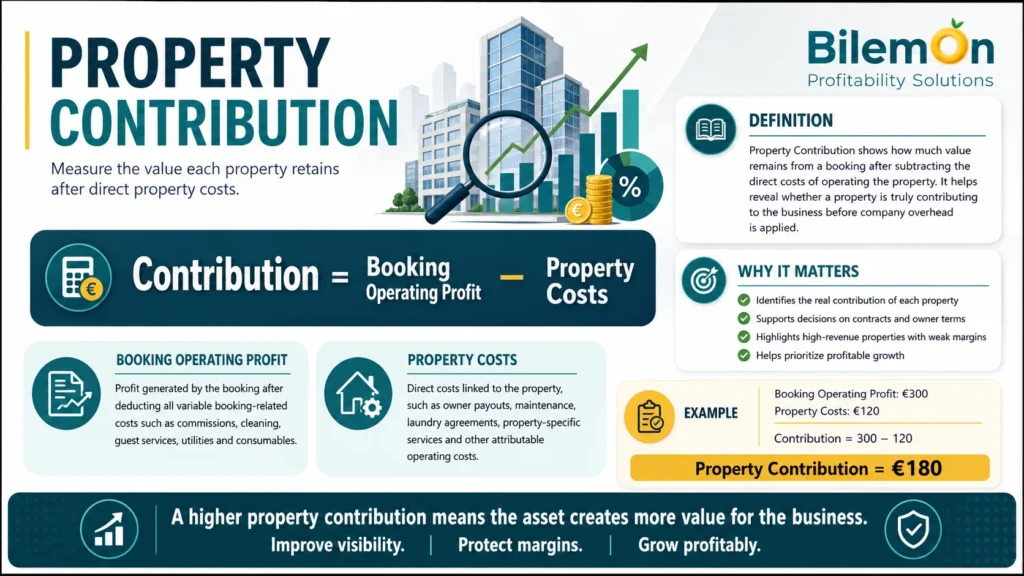
Property contribution
Property costs are the expenses associated with operating, maintaining and keeping the property available, regardless of whether a specific booking exists.
Electricity, water and internet.
Community charges and insurance.
Maintenance and minor repairs.
Garden and swimming-pool services.
Equipment replacement.
Local taxes and licences.
Furniture depreciation.
Finance costs.
Expenses assumed under the owner agreement.
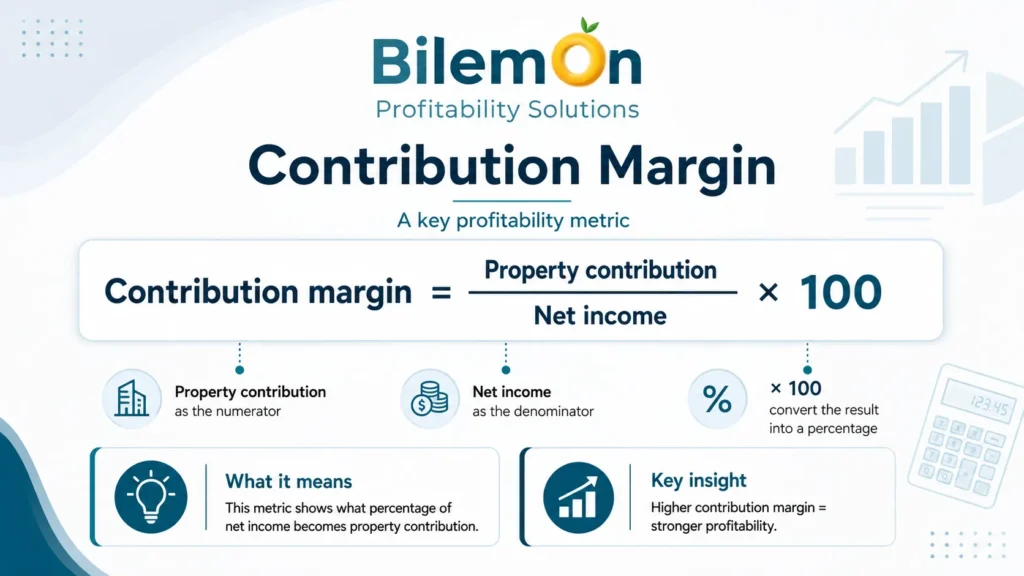
Property contribution
The contribution margin shows how much money the property actually contributes towards financing the company structure.
Step four: allocate company overhead
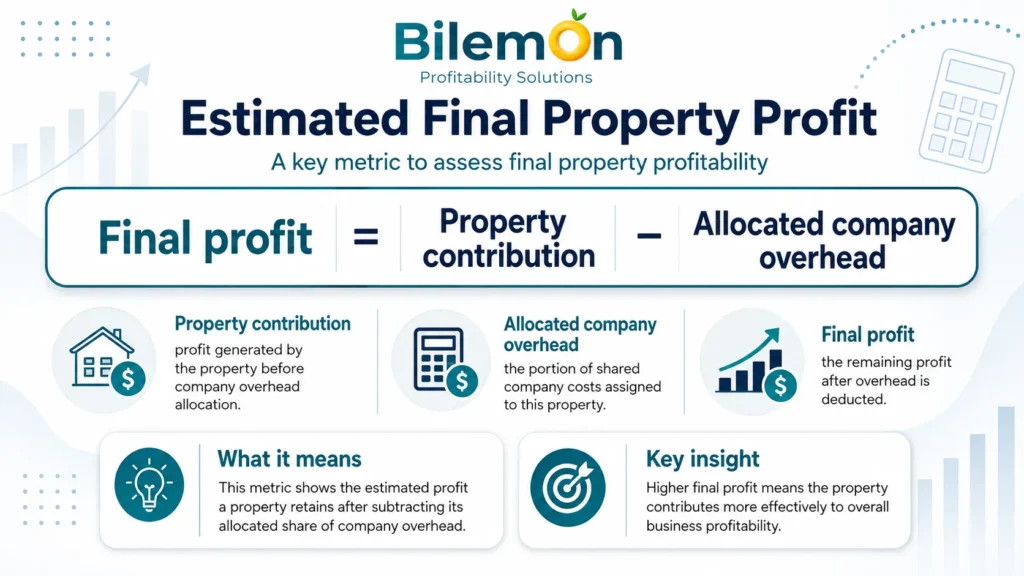
Estimated final property profit
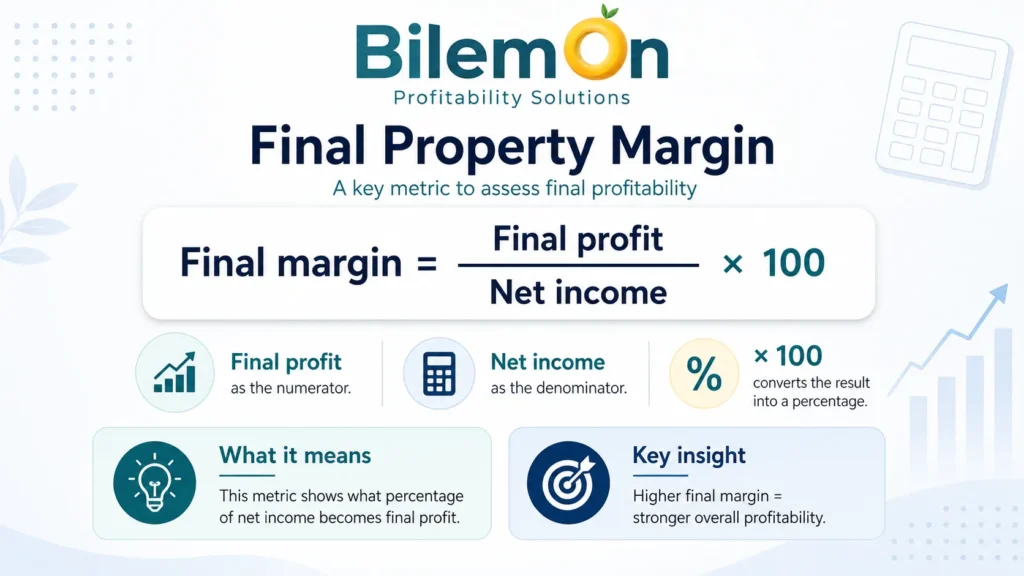
Final property margin
To understand final profitability, the property cannot be analysed in isolation. Its share of the company’s general operating costs must also be included.
Staff and social security.
Management and administration.
Office, utilities, telephone and internet.
PMS, channel manager, booking engine and software.
Marketing, website and photography.
Tax, employment and legal advice.
Insurance, vehicles and travel.
IT equipment, training and taxes.
Bank charges and other general expenses.
These costs should be allocated using consistent criteria. Dividing them equally by the number of properties is not always appropriate.
Revenue generated.
Number of bookings and nights.
Working hours.
Number of incidents.
Operational complexity.
Distance and logistics.
Services included.
Administrative workload.
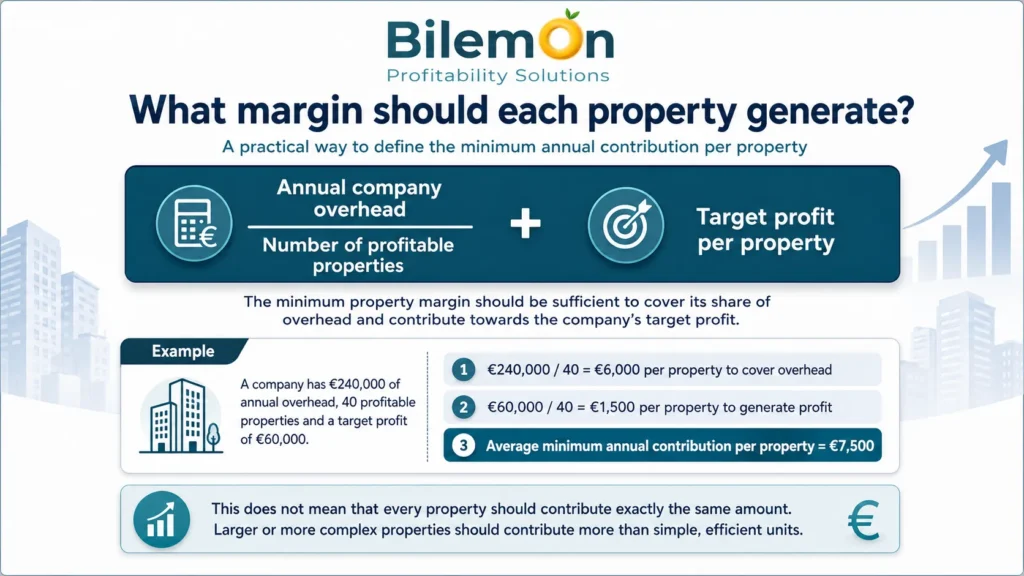
What margin should each property generate?
Annual company overhead / Number of profitable properties + Target profit per property
The minimum property margin should be sufficient to cover its share of overhead and contribute towards the company’s target profit.
Example: a company has €240,000 of annual overhead, 40 profitable properties and a target profit of €60,000.
€240,000 / 40 = €6,000 per property to cover overhead.
€60,000 / 40 = €1,500 per property to generate profit.
Average minimum annual contribution per property = €7,500.
This does not mean that every property should contribute exactly the same amount. Larger or more complex properties should contribute more than simple, efficient units.
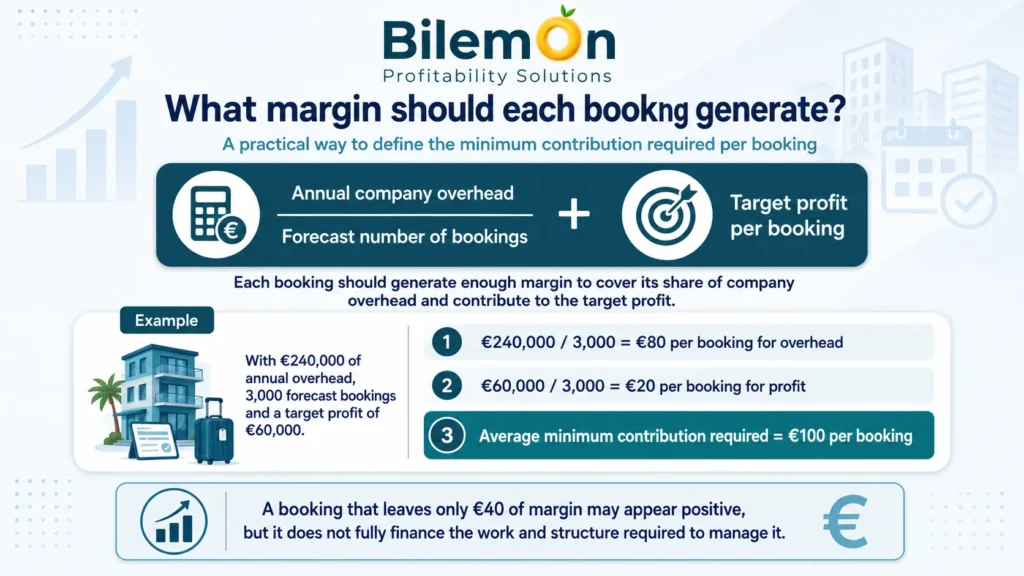
What margin should each booking generate?
Annual company overhead / Forecast number of bookings + Target profit per booking
Example: with €240,000 of overhead, 3,000 annual bookings and a target profit of €60,000:
€240,000 / 3,000 = €80 per booking for overhead.
€60,000 / 3,000 = €20 per booking for profit.
Average minimum contribution required = €100 per booking.
A booking that leaves only €40 of margin may appear positive, but it does not fully finance the work and structure required to manage it.