Bilemon

Profitability KPIs

Profitability KPIs help property managers understand whether business activity is truly creating value.

Revenue and occupancy alone do not explain financial performance. A company can grow sales and still lose margin, generate weak cash flow, or operate inefficiently.

By monitoring indicators such as net revenue, operating margin, cost per occupied night, cash flow, and profitability per property, teams gain a clearer view of performance.

These KPIs help detect deviations earlier, allocate resources more effectively, protect margins, and support better, more sustainable business decisions.

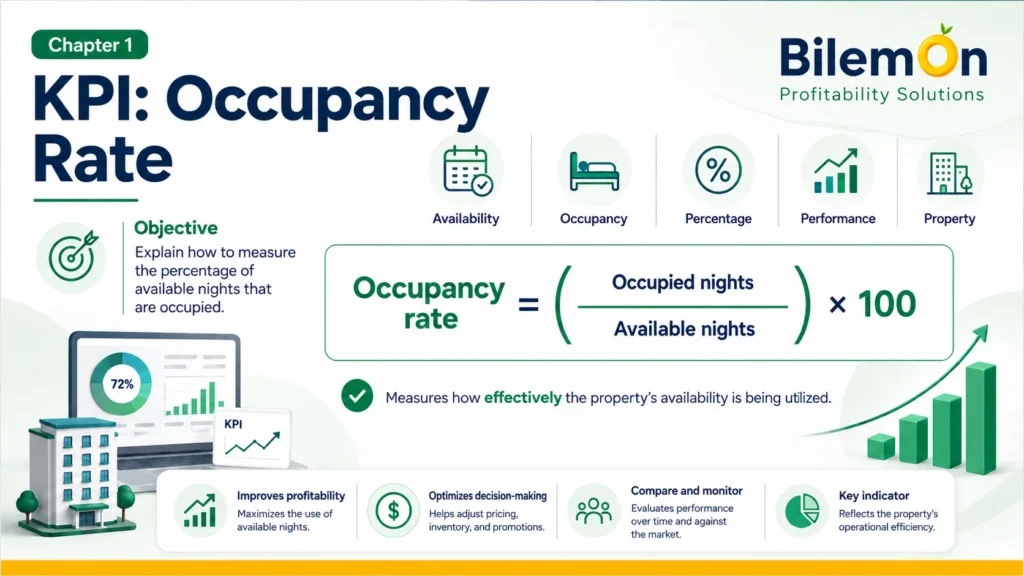
Occupancy Rate

Measures the percentage of available inventory that is actually occupied.

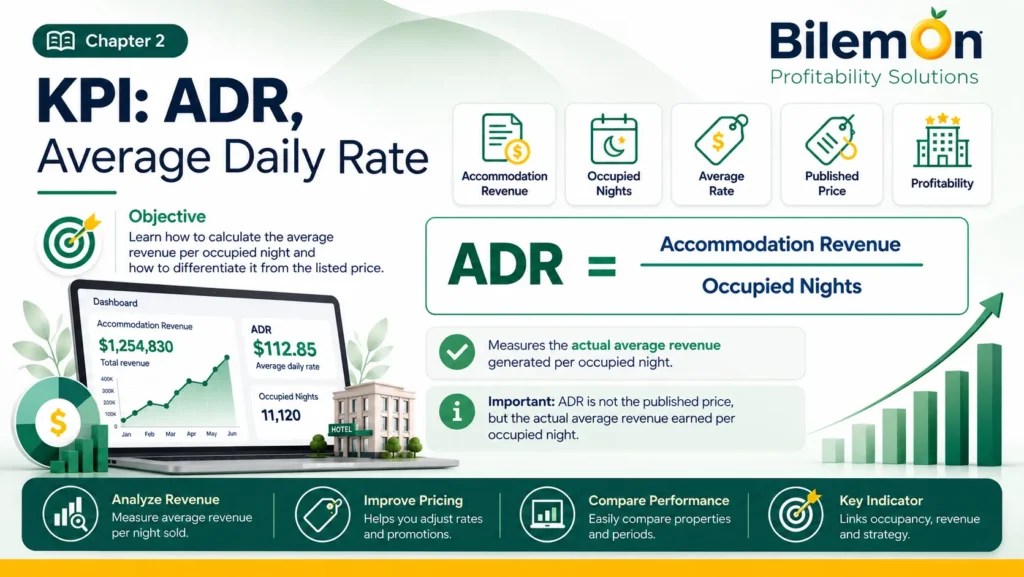
ADR, Average Daily Rate

Shows the average price achieved for each occupied night.

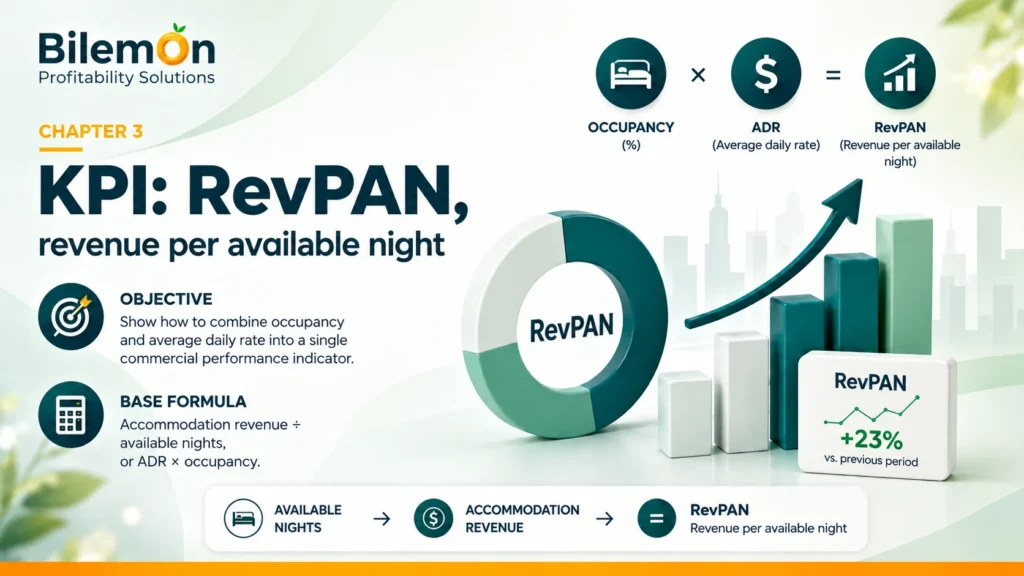
RevPAN / RevPAR

Measures the revenue generated from available inventory and helps connect pricing with occupancy performance.

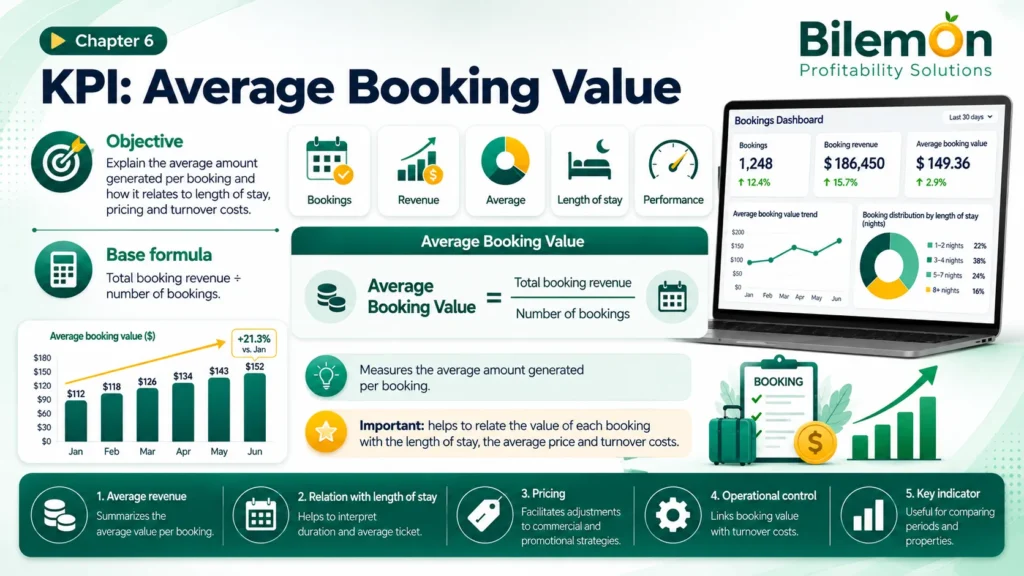
Average Booking Value

Shows the average economic value generated by each booking.

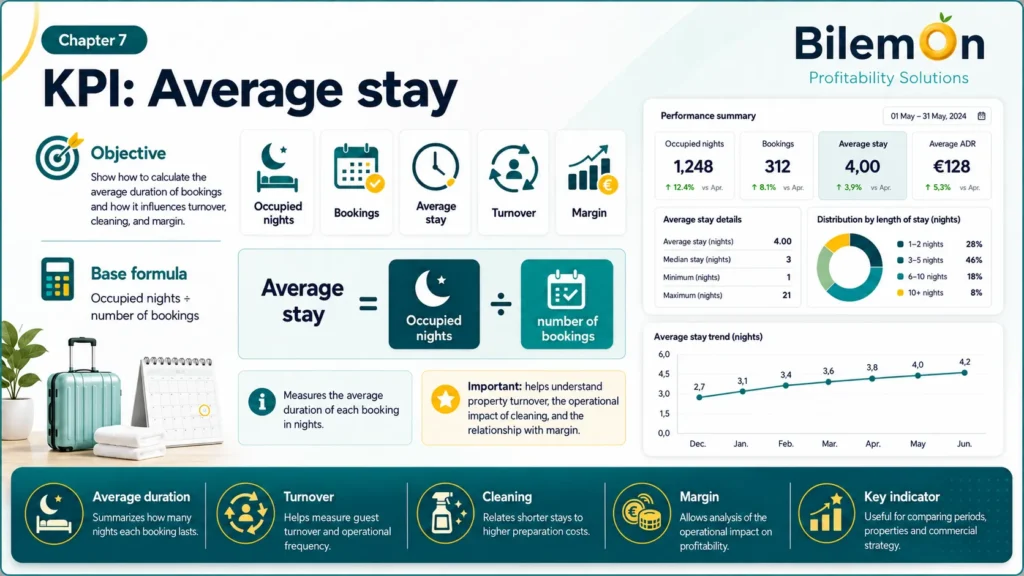
Average Length of Stay

Helps explain how booking duration affects operating costs, turnover, and profit margins.

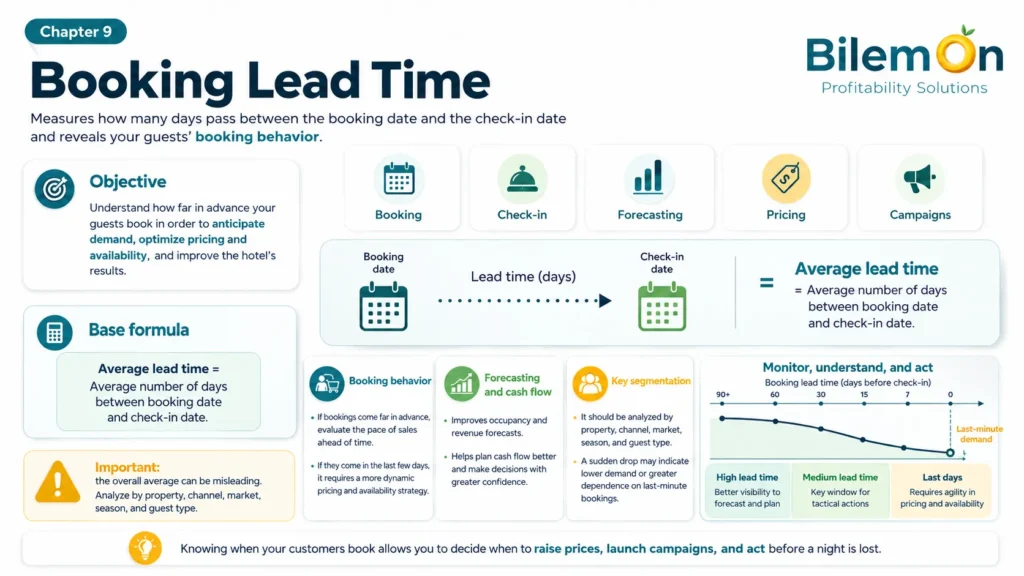
Booking Lead Time

Measures how far in advance bookings are made and supports better pricing and planning decisions.

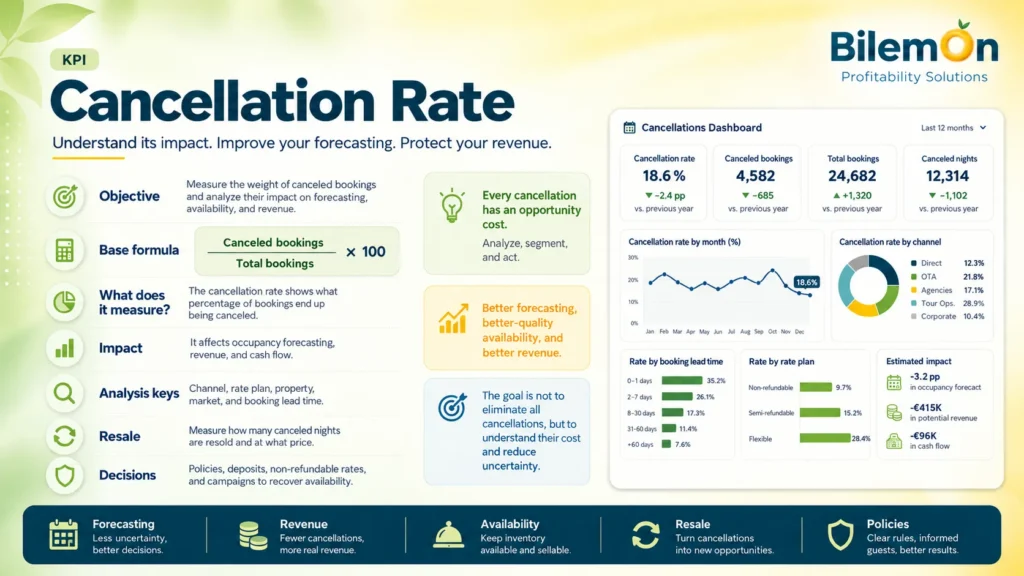
Cancellation Rate

Measures the percentage of cancelled bookings and their impact on occupancy, revenue, and forecasting.

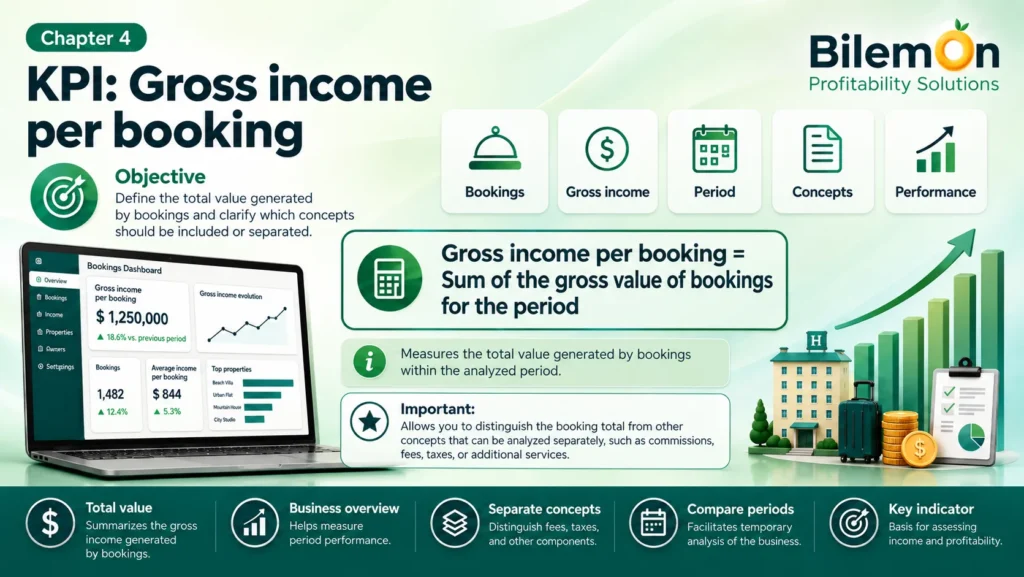
Gross Revenue

Represents the total revenue generated by the business.

Net Revenue

Shows what remains after commissions, discounts, and other adjustments.

Cost per Occupied Night

Measures the real cost of delivering each occupied night.

Operating Margin

Shows how much revenue remains after covering operating costs.

Profitability per PropRTY

Identifies which properties create value and which ones reduce overall portfolio profitability.

Cash Flow

Shows how money moves in and out of the business and helps anticipate treasury needs.

Cost Distribution

Explains how costs are distributed across properties, company structure, bookings, staff, technology, and suppliers.

Property Contribution

Shows the real financial contribution of each property after considering associated revenues and costs.