





How to Increase Profitability in Tourist Accommodations with Bilemon
3 Strategies That Impact Profit
Profitability in the tourism accommodation sector does not depend solely on securing more reservations, increasing occupancy, or adding new properties to the portfolio.
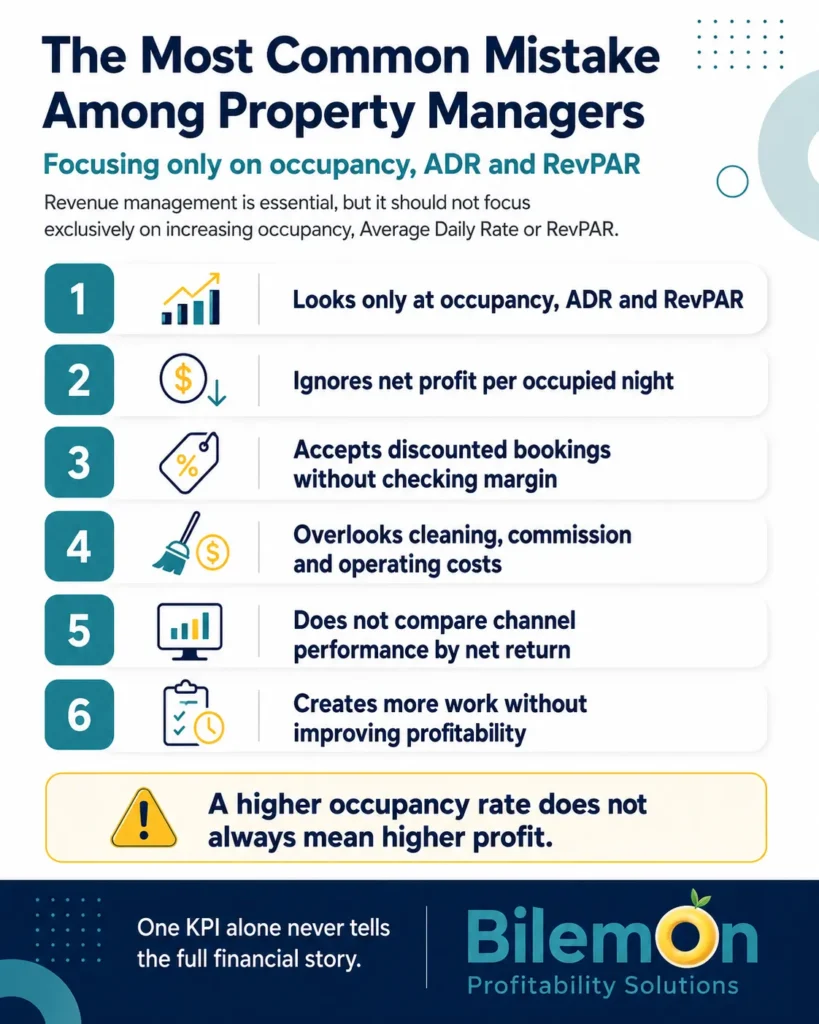
A property can generate more revenue and, at the same time, yield less profit if commissions, operating costs, incidents, discounts, or the team’s workload increase.
That’s why the real question isn’t how much revenue a property brings in, but how much actual profit remains after covering all the costs required to manage it.
Bilemon helps vacation rental companies transform data from reservations, properties, owners, banks, revenue, costs, and PMS into clear financial insights.
The goal is to stop managing based on intuition and start making decisions based on the business’s actual profitability.
Here are three key strategies for improving the financial performance of a vacation rental portfolio
1. Analyze profitability by property, reservation, and channel
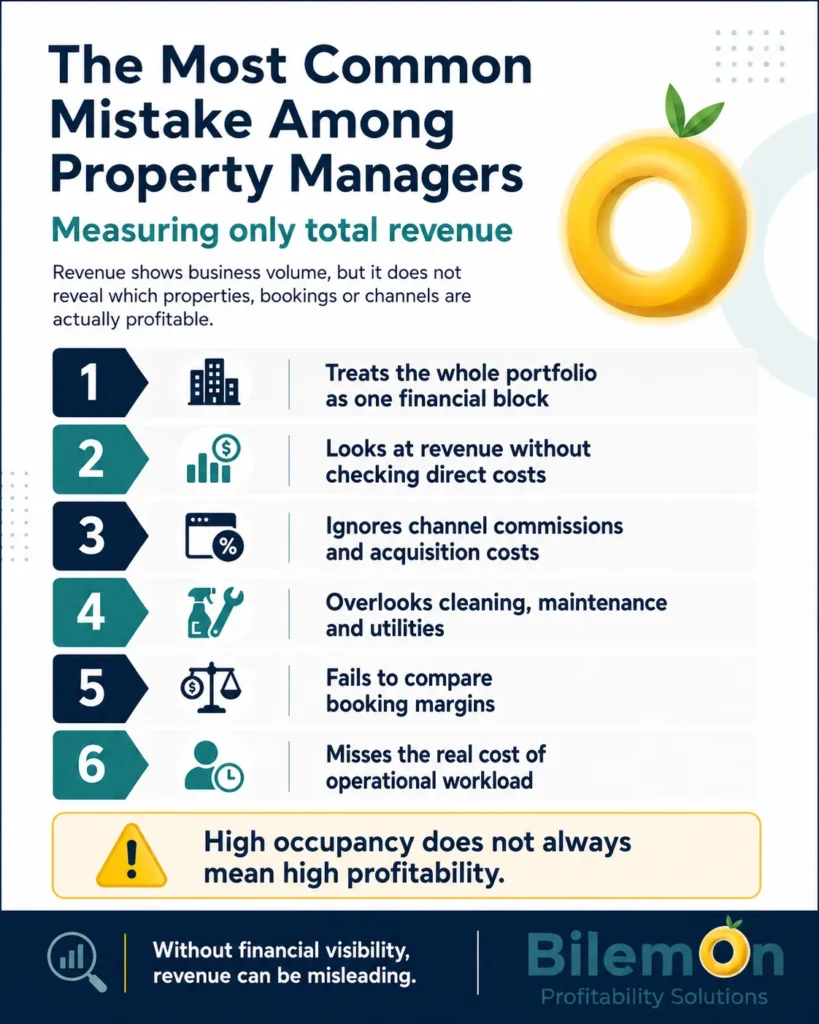
One of the most common mistakes in managing vacation rentals is focusing solely on total revenue.
Revenue provides insight into the volume of business, but it doesn’t show which properties, bookings, or channels are actually generating profits.
Each property should be treated as an independent economic unit.
It is necessary to analyze its revenue, direct costs, commissions, maintenance, cleaning, supplies, and operating expenses. A property with high occupancy may be unprofitable if it operates with low prices, stays that are too short, or excessive turnover costs.
It is also advisable to calculate the margin for each reservation.
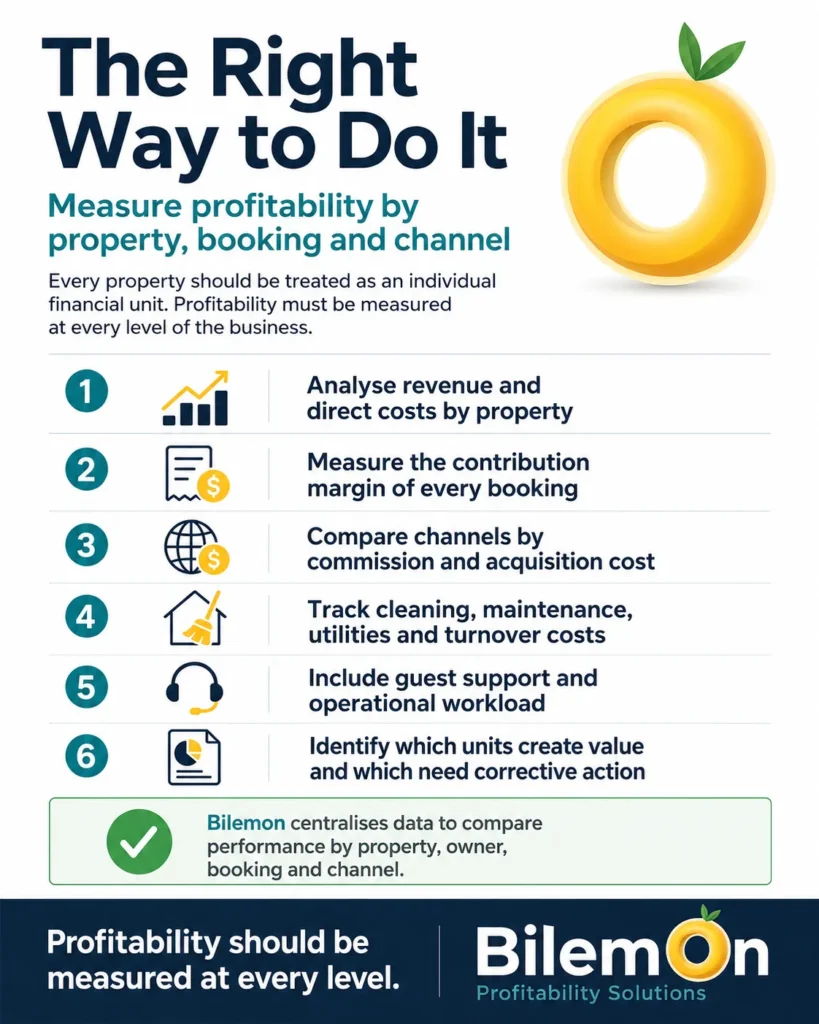
Two reservations with the same total amount can yield very different results. One may come from a channel with a high commission, while the other may be a direct reservation with a lower acquisition cost.
In addition, some reservations require more attention, more cleaning, more travel, or more team resources.
Bilemon allows you to centralize this information and compare the performance of each property, owner, booking, and channel. This way, the manager can identify which units create value, which ones need adjustments, and which ones consume resources without offering a sufficient margin.
The first strategy for increasing profitability is to stop managing the portfolio as a single unit and start measuring profit at every level of the business.
2. Monitor all costs, including hidden costs
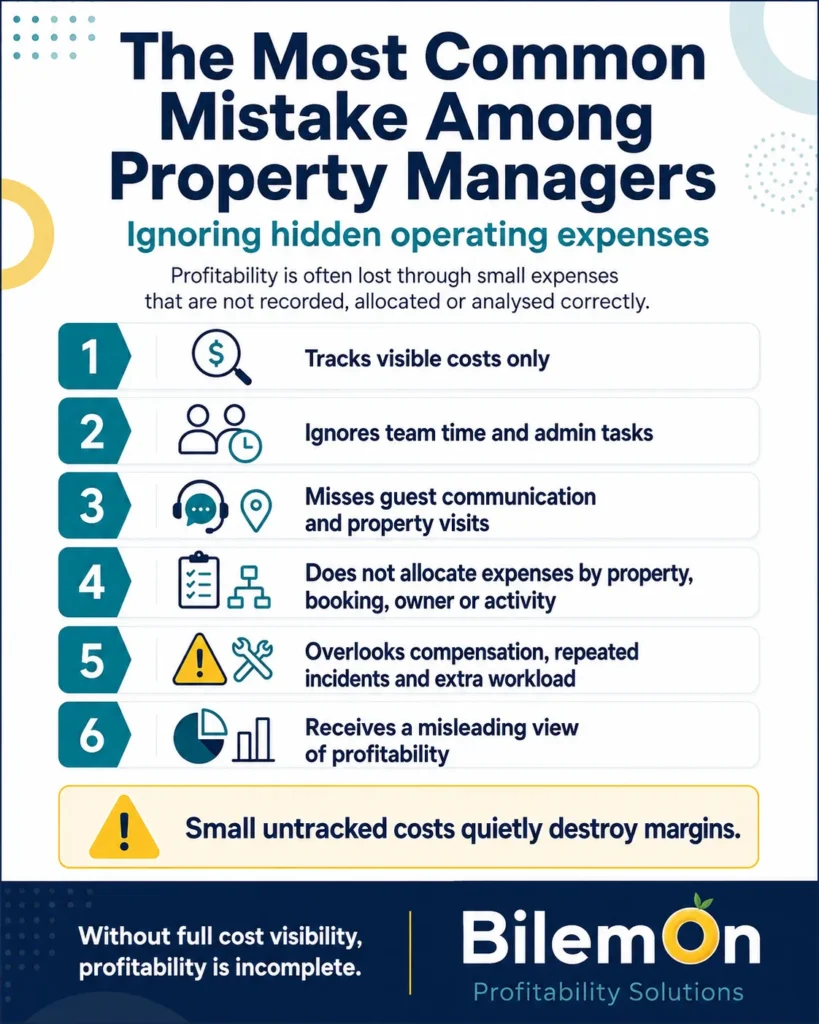
Profitability in the vacation rental business is often eroded by small expenses that go unrecorded or are not properly allocated.
Cleaning, laundry, amenities, maintenance, supplies, software, and commissions are relatively easy to identify.
However, there are less visible costs, such as staff time, administrative tasks, guest services, travel, compensation, and the additional management required by a problematic property.
When these expenses aren’t properly accounted for, the business gets an incomplete picture of its margins.
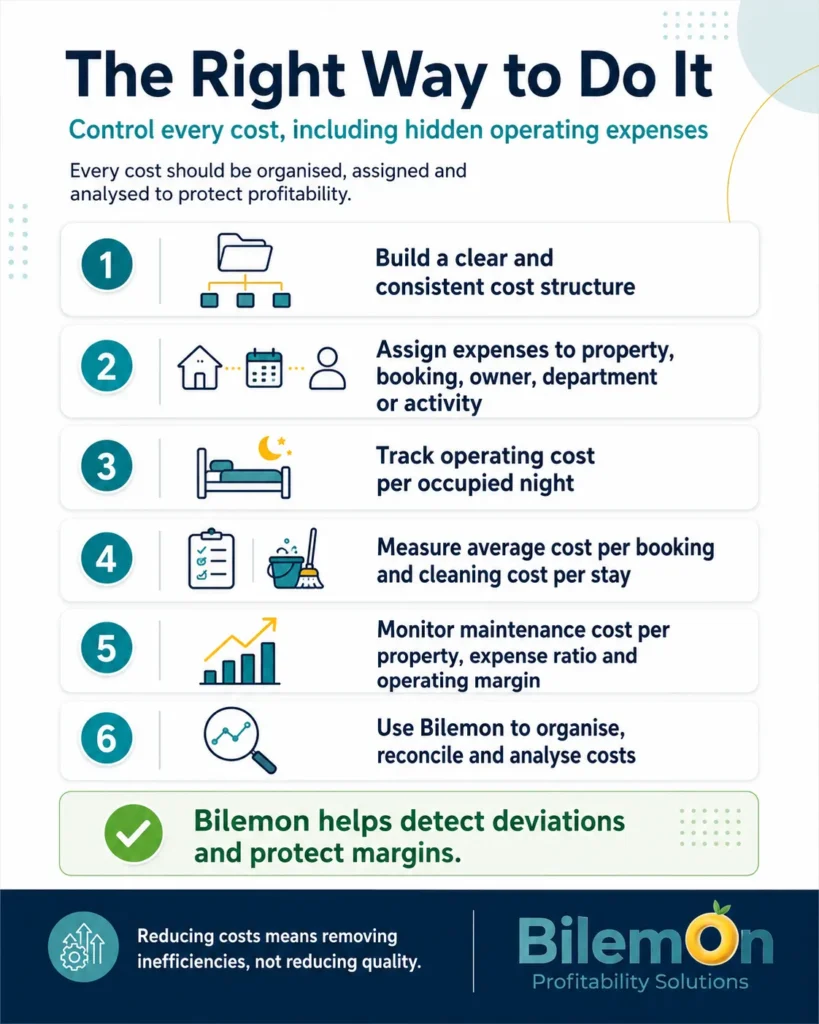
Control must begin with a clear and consistent category structure. Each expense should be linked, whenever possible, to a property, a reservation, an owner, or a specific area of the business.
From there, it is essential to track metrics such as:
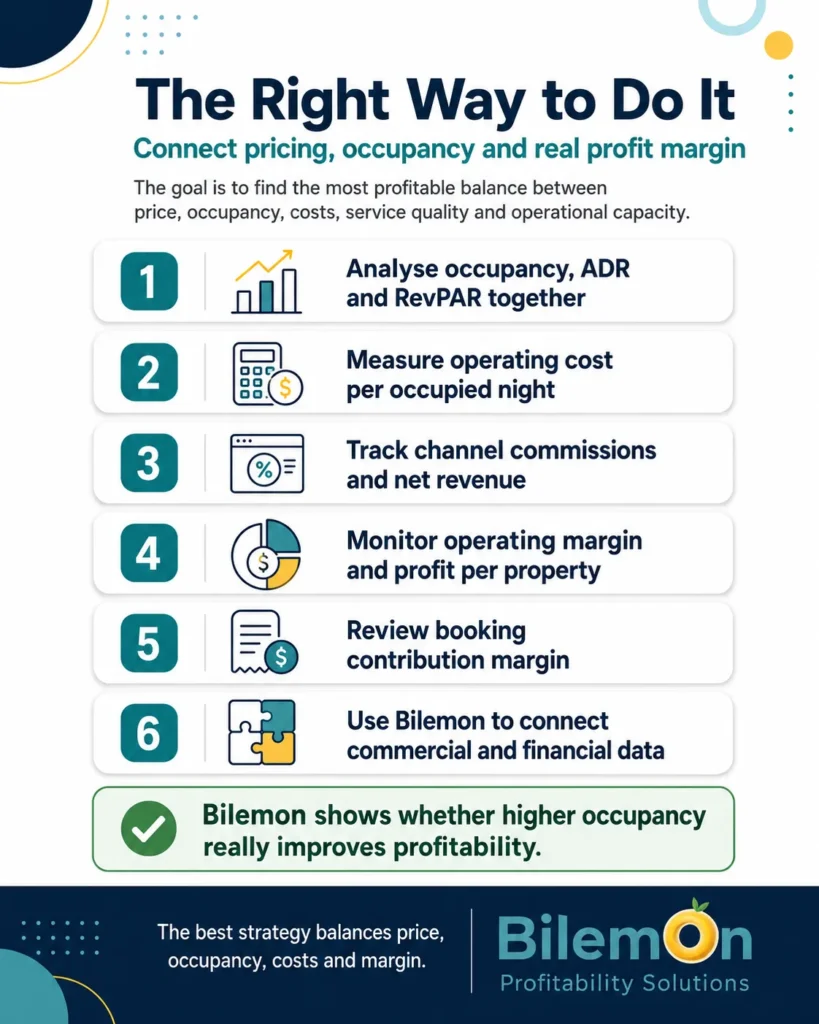
- Operating cost per occupied night.
- Average cost per reservation.
- Maintenance cost per property.
- Cleaning cost per stay.
- Percentage of expenses relative to revenue.
- Operating margin per accommodation unit.
Bilemon helps organize, reconcile, and analyze these costs to identify variances and pinpoint where margins are being lost.
This visibility allows you to renegotiate contracts with suppliers, review processes, reduce unnecessary tasks, and adjust management practices for less efficient properties.
Reducing costs does not mean lowering the quality of service. It means eliminating inefficiencies and ensuring that every euro invested contributes to improving the guest experience or business performance.
3. Linking Prices, Occupancy, and Actual Margin
Profitability in the vacation rental business is often eroded by small expenses that go unrecorded or are not properly allocated.
Cleaning, laundry, amenities, maintenance, supplies, software, and commissions are relatively easy to identify.
However, there are less visible costs, such as staff time, administrative tasks, guest service, travel, compensation, and the additional management required by a problematic property.
When these expenses aren’t properly accounted for, the business gets an incomplete picture of its margins.
Control must begin with a clear and consistent category structure. Each expense should be linked, whenever possible, to a property, a reservation, an owner, or a specific area of the business.
From there, it is essential to track metrics such as:
- Operating cost per occupied night.
- Average cost per reservation.
- Maintenance cost per property.
- Cleaning cost per stay.
- Percentage of expenses relative to revenue.
- Operating margin per accommodation unit.
Bilemon helps organize, reconcile, and analyze these costs to identify variances and pinpoint where margins are being lost.
This visibility allows you to renegotiate contracts with suppliers, review processes, reduce unnecessary tasks, and adjust management practices for less efficient properties.
Reducing costs does not mean lowering the quality of service. It means eliminating inefficiencies and ensuring that every euro invested contributes to improving the guest experience or business performance.
From Data to Profitable Decisions
Increasing profitability in tourist accommodations requires a deeper understanding than simply looking at revenue and reservations.
Managers need to know which properties are turning a profit, which costs are eroding margins, and which business decisions improve the bottom line.
Bilemon transforms scattered data into clear metrics on profitability, cash flow, costs, margins, and performance per property.
This information allows you to anticipate problems, compare results, and take action before a deviation turns into a loss.
Increasing revenue can be a good thing. Better management means knowing how much actual profit remains and which decisions will increase it sustainably.