





Los ingresos pueden crear una falsa sensación de éxito
Un alquiler vacacional puede generar un gran número de reservas, una alta ocupación e impresionantes ingresos brutos, pero generar pocos beneficios. Esto ocurre cuando los gestores se centran en las ventas, pero no miden el coste total que supone obtenerlas.
Los ingresos brutos son los ingresos totales generados antes de las deducciones. Pueden incluir los ingresos por alojamiento, las tarifas de limpieza, los servicios adicionales, los ingresos por cancelaciones y otros cargos a los huéspedes. El beneficio es lo que queda después de deducir las comisiones, los costes operativos y los gastos fijos.
Para los propietarios, confundir ingresos con beneficio puede generar expectativas poco realistas. Para los gestores inmobiliarios, puede ocultar márgenes reducidos, servicios con precios demasiado bajos y propiedades que consumen más recursos de los que aportan.
Cómo funciona la cuenta de resultados
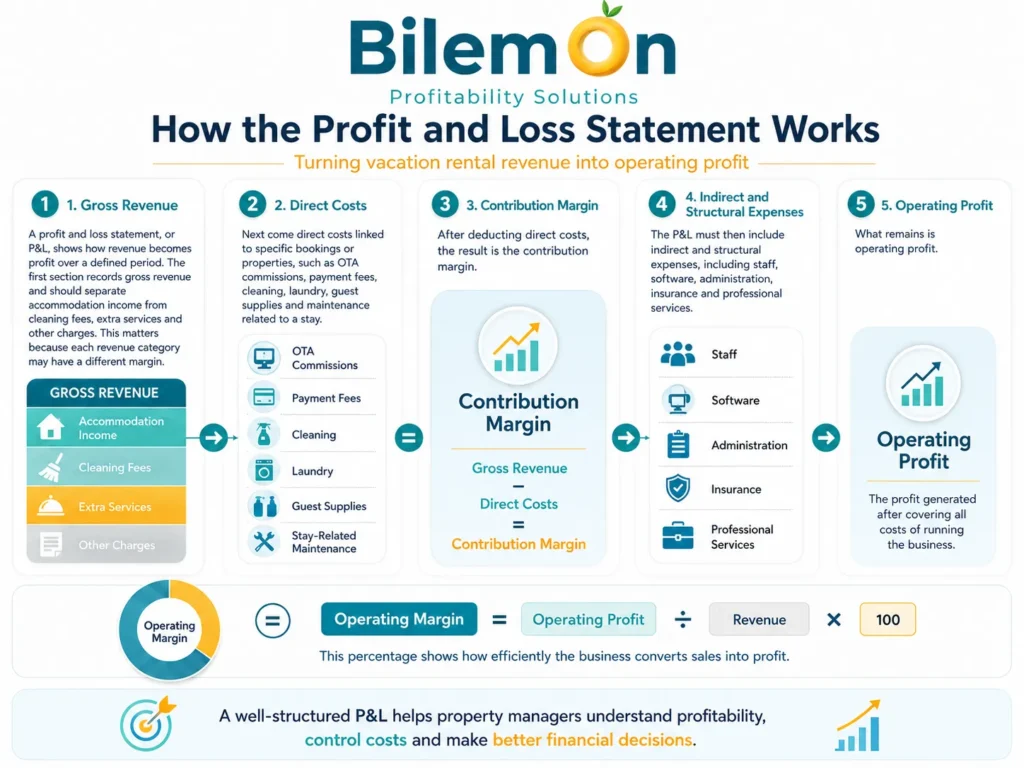
Una cuenta de resultados, o P&L, muestra cómo los ingresos se convierten en beneficios durante un periodo determinado.
La primera sección recoge los ingresos brutos y debe diferenciar los ingresos por alojamiento de las tarifas de limpieza, los servicios adicionales y otros cargos. Esto es importante porque cada categoría de ingresos puede tener un margen diferente.
A continuación, se incluyen los costes directos vinculados a reservas o propiedades específicas, como las comisiones de las OTA, las comisiones de pago, la limpieza, la lavandería, los suministros para los huéspedes y el mantenimiento relacionado con la estancia.
Tras deducir los costes directos, el resultado es el margen de contribución. A continuación, la cuenta de resultados debe incluir los gastos indirectos y estructurales, como personal, software, administración, seguros y servicios profesionales. Lo que queda es el beneficio de explotación.
Margen de explotación = Beneficio de explotación ÷ Ingresos × 100
Este porcentaje muestra la eficiencia con la que la empresa convierte las ventas en beneficios.
Margen operativo = Beneficio operativo ÷ Ingresos × 100
¿En qué podemos ayudarte?
Ponte en contacto con nosotros en la oficina de Consulting WP más cercana o envía una consulta comercial por Internet.
Formación Bilemon
Mallorca – CREA 360º by Bilemon. – Educación y formación financiera sobre el Método de Gestión de empresas de Alquiler Vacacional
-
20 de octubre de 2026
-
16:00
-
Camí de son Pons, 17, 07620 Llucmajor, España
Participantes
Bilemon Education está pensado para profesionales que desean mejorar el rendimiento empresarial mediante el uso de datos, análisis y una toma de decisiones más inteligente. Nuestra formación está dirigida a:
gestores de propiedades, gestores de ingresos, directores de operaciones, propietarios de empresas, directores generales, analistas financieros, profesionales del sector hotelero, emprendedores, inversores y empresas de alquiler vacacional.
¿A quién va dirigido?
Bilemon Education está diseñado para profesionales que creen que unas mejores decisiones se basan en unos mejores datos. Tanto si gestionas diez inmuebles como miles, nuestra formación te ayuda a comprender tu negocio, mejorar la rentabilidad y aprovechar todo el potencial de la inteligencia empresarial.